Learning German
German B1 Exam Study Tips
October 22, 2026
How to prepare for each section of the German B1 exam: reading, writing, listening and speaking, with tips for mock tests and exam day.
Read More »
Grammar, vocabulary, pronunciation and study strategies to help you learn German with confidence.
October 22, 2026
How to prepare for each section of the German B1 exam: reading, writing, listening and speaking, with tips for mock tests and exam day.
Read More »October 19, 2026
Role-playing, shadowing and mock presentations: practical ways to get ready for the speaking module of the German B1 exam.
Read More »October 14, 2026
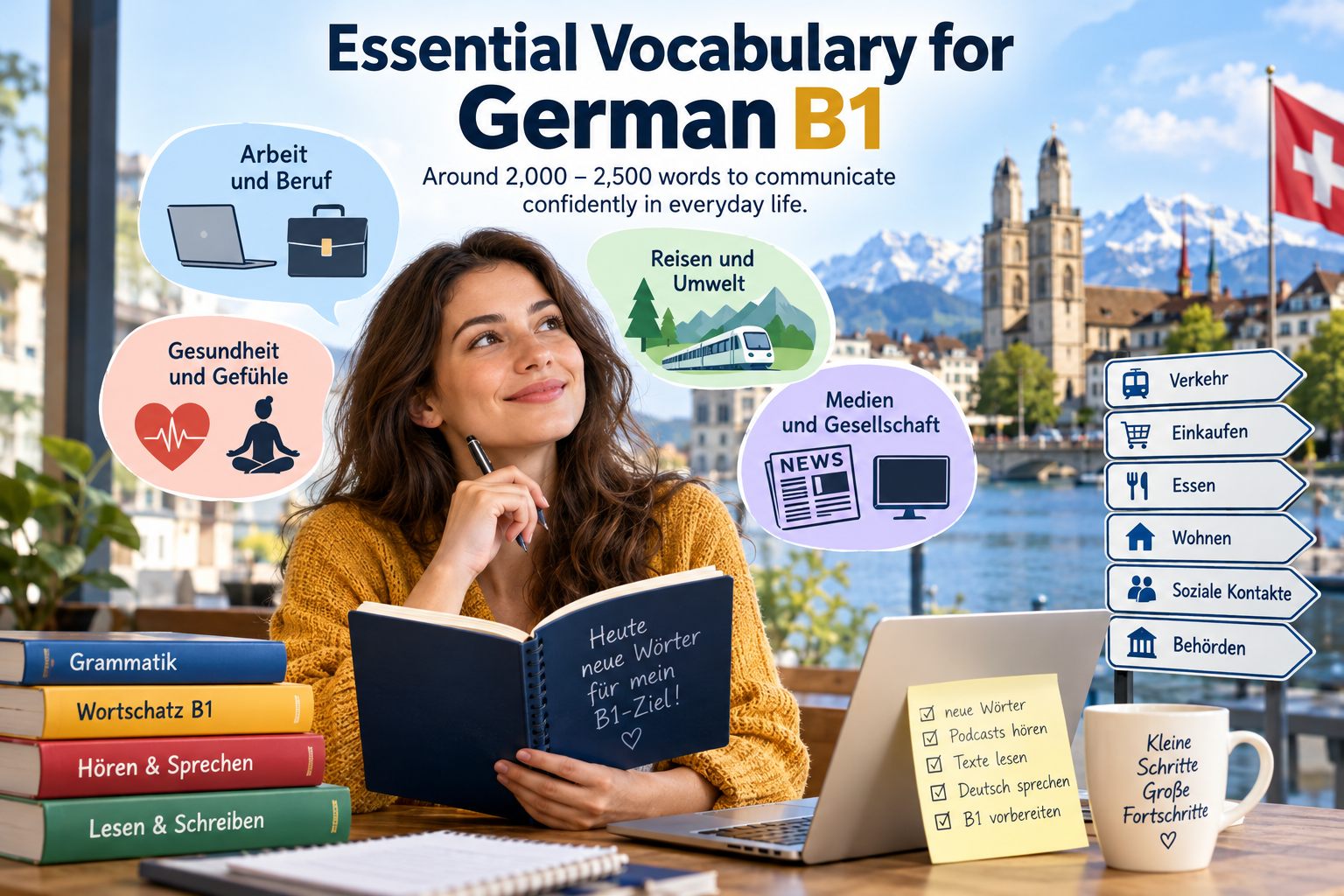
B1 takes around 2,000 to 2,500 German words. Here is what to learn, what the level lets you do, and how long it realistically takes.
Read More »September 23, 2026
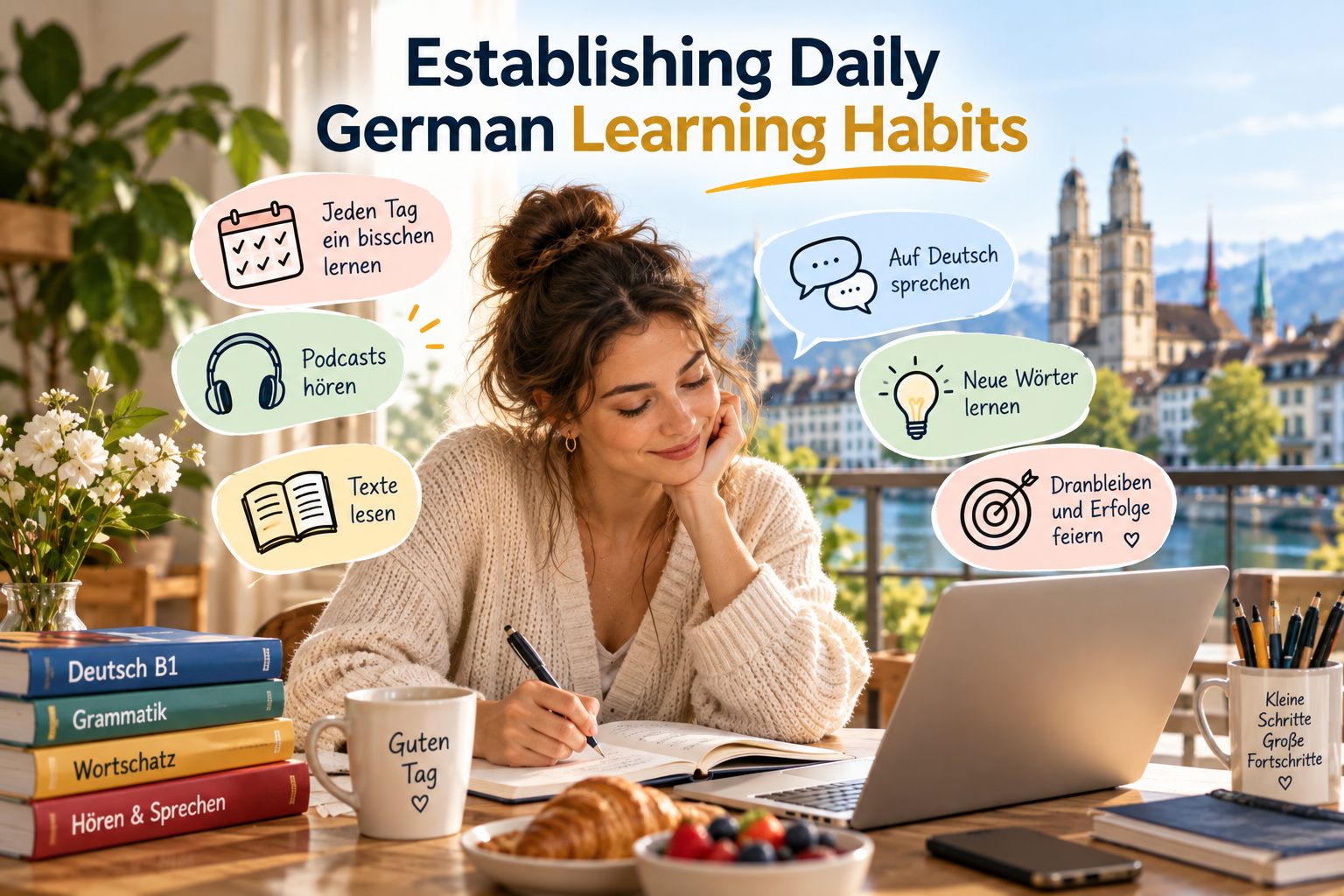
Practice makes perfect, but only if it becomes a habit. Here is how to build a daily German routine a teenager will actually stick to.
Read More »September 21, 2026
International school students in Switzerland often need German for university entrance and daily life alike. Here is how to build both, efficiently.
Read More »September 19, 2026
Choosing a German exam prep course for a teenager means matching the format to their goals. Here is how the main options compare, and what to check before enrolling.
Read More »September 17, 2026
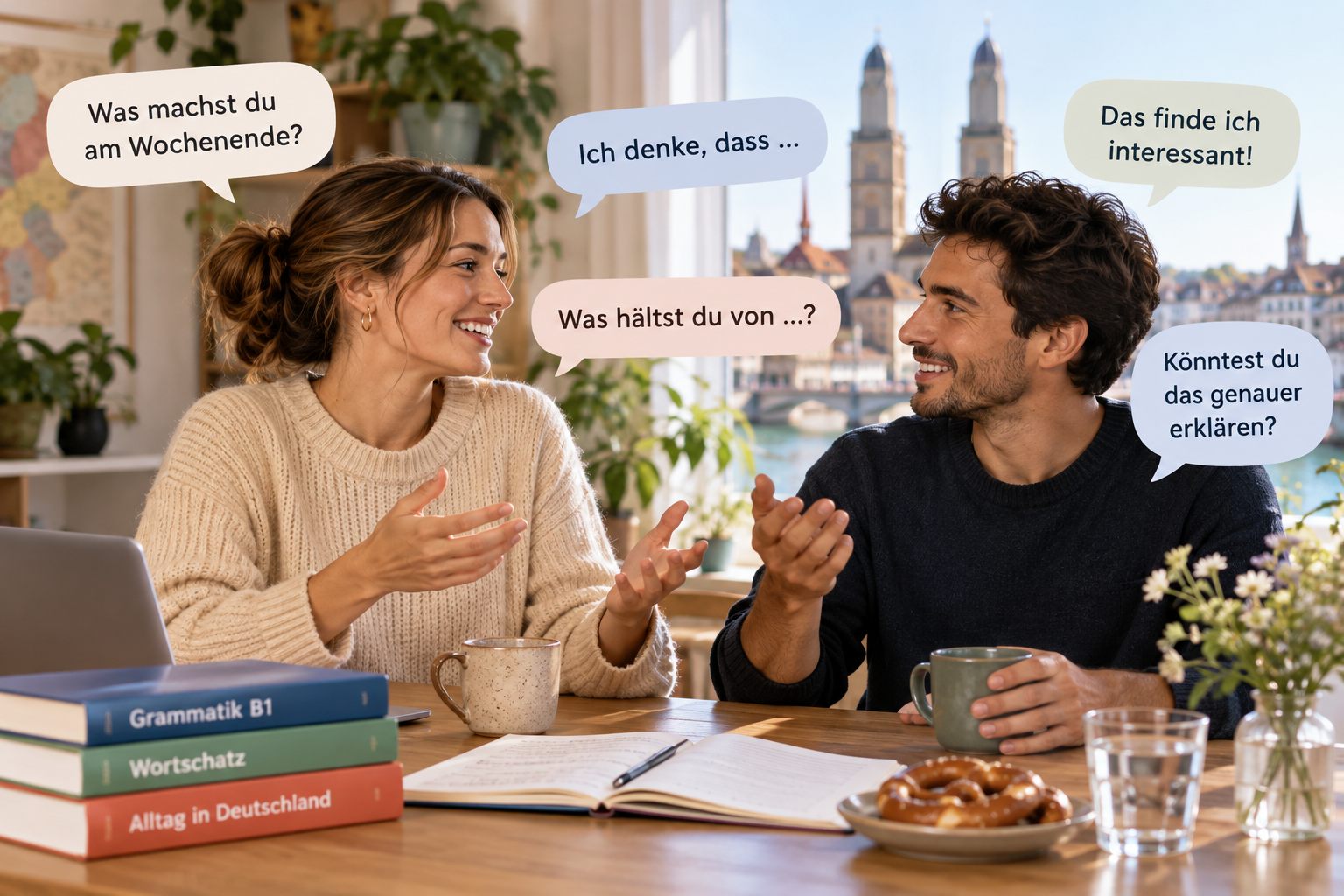
Your teenager can memorize vocabulary and grammar, but holding real conversations is what makes German stick. Here is how to build that skill day to day.
Read More »August 27, 2026
A1 German explained: what the CEFR level covers, the four skills you need, and how an online A1 German course can help you reach it faster.
Read More »August 27, 2026
How many months it takes to learn German: the FSI timeline, hours needed per CEFR level, and how your study schedule changes the picture.
Read More »August 27, 2026
The most important A2 German grammar topics: noun gender, articles, adjective endings, modal verbs, cases, and word order.
Read More »July 15, 2026
Practicing German doesn't end when your lesson does. Here are fun, low-pressure ways for adults to use and expand their German out in the real world.
Read More »July 13, 2026
Four essential grammar rules every adult German learner should know, from articles and gender to word order, the case system, and Sie versus sie.
Read More »July 11, 2026
How many words do you really need, and how do you make them stick? A practical guide to building German vocabulary as a busy adult.
Read More »July 9, 2026
Moving abroad? These essential German greetings, phrases, and workplace, medical, and housing vocabulary will help you settle into life in Switzerland.
Read More »July 7, 2026
Set specific, measurable, achievable, relevant, and time-bound goals to keep your German learning on track, even when life gets in the way.
Read More »June 17, 2026
The advantages of private German tutoring for adults: lessons shaped around you, more speaking time, flexible scheduling, and faster, more confident progress.
Read More »June 17, 2026
Seven common mistakes adult German learners make, from avoiding speaking to translating from English, and how a private teacher helps catch them early.
Read More »June 17, 2026
How to build a German study schedule that sticks: define a clear goal, prioritize consistency, categorize skills, and work with an expert teacher.
Read More »June 17, 2026
Seven language-learning strategies for adults: set concrete goals, prioritize speaking practice, study regularly, and get fast, useful feedback.
Read More »June 17, 2026
A handy list of the most useful German phrases for adults: everyday greetings, workplace lines, and settling-in essentials.
Read More »June 17, 2026
Why practicing German conversation is the fastest route to fluency for adults, and how private lessons turn practice into real progress.
Read More »June 17, 2026
Private versus group German lessons: how they differ on personalization, speaking time, scheduling, and price, so you can pick the faster route.
Read More »June 17, 2026
The main German pronunciation challenges for English speakers: umlauts, the two ch sounds, the rolled r, and letters that change their sound.
Read More »June 17, 2026
How to schedule private German lessons around work: set a clear goal, build a routine, match your energy, and keep enough flexibility.
Read More »June 17, 2026
Time management for language learning adults: set a goal, work around your routines, prioritize consistency, and anchor progress with private lessons.
Read More »October 29, 2025
How professional German courses support Swiss work permits, job applications and the transition from a B permit to a C permit, plus the language levels involved.
Read More »October 29, 2025
How to deal with a lack of motivation in an online German course: accountability, active learning, an optimized study space, and small, manageable goals.
Read More »October 29, 2025
What makes a German course intensive, who benefits most, and how focused daily study helps you reach fluency faster.
Read More »October 6, 2025
How class size affects language learning success: why large groups limit speaking time and feedback, and how private lessons help you progress faster.
Read More »October 6, 2025
Three student success stories from German Academy Zurich: daily conversations in three months, passing the fide exam, and everyday confidence.
Read More »October 6, 2025
What big language schools don't tell you about group lessons: limited speaking time, a one-size-fits-all approach, and hidden costs.
Read More »October 6, 2025
Why personalized attention in language learning matters: more speaking time, immediate feedback, flexible pacing, and accountability.
Read More »September 10, 2025
A step-by-step guide to the Swiss fide test: what it assesses, the test format, how to register, and how to prepare with a structured course.
Read More »August 27, 2025
A2 German proficiency covers daily routines, travel, dining, shopping, health, hobbies, family, culture and work vocabulary: the key content areas for real conversations.
Read More »August 27, 2025
The advantages of virtual German classes for beginners: personalized learning, affordable and accessible courses, and round-the-clock support and resources.
Read More »August 27, 2025
How to get German cultural immersion through online classes: cultural context, media in German, and why online learning fits a busy expat life.
Read More »August 27, 2025
A review of our new digital A1 German course: self-paced lessons, private one-on-one tutoring, and mobile-friendly access.
Read More »August 27, 2025
A beginner's guide to starting German as an adult: setting goals, choosing a learning method, immersion, regular practice, and tracking progress.
Read More »August 27, 2025
The most important grammar for A1 German: sentence structure, verb conjugation, pronouns, articles, negation, cases, and word order.
Read More »August 20, 2025
What to expect from the Swiss B permit integration language assessment: sample scenarios, the fide test format, and how to prepare with a language course.
Read More »August 20, 2025
How to choose the best integration language program for a Swiss B permit: language requirements by canton, what to look for in a program, and the fide framework.
Read More »August 20, 2025
What makes a Swiss language and integration program effective: practical everyday German, alignment with integration requirements, and cultural context.
Read More »August 20, 2025
Expert tips for Swiss B permit exam preparation: focus on practical communication, build a realistic study schedule, and avoid common learner mistakes.
Read More »August 20, 2025
How to improve your B permit test scores: master the oral component, build strategic vocabulary, and use test-day strategies that reduce stress.
Read More »August 20, 2025
How to prepare for the Swiss integration exam: a study timeline, mastering everyday German, and building the cultural knowledge you need.
Read More »August 20, 2025
The language requirements for Swiss citizenship: typical CEFR thresholds, what CEFR measures, and how to prove your proficiency.
Read More »August 20, 2025
Why the oral part of the Swiss residency exam feels harder than reading or writing, and how consistent speaking practice builds real confidence.
Read More »August 20, 2025
What a Swiss integration language course covers: real-life communication skills, culture, customs, and everyday life in Switzerland.
Read More »August 20, 2025
What is tested in the Swiss integration exam: language proficiency, an interview, and proof of social and economic integration.
Read More »July 2, 2025
Can you learn A2 German in six months? Yes, with the right factors, strategies and an intensive course option from German Academy Zurich.
Read More »July 2, 2025
Can you learn German A2 by yourself? Yes, with the right resources and discipline, though a course or tutor helps with feedback and structure.
Read More »July 2, 2025
How a fide language certificate helps your career in Switzerland: what the test involves, how it is scored, and what higher levels signal to employers.
Read More »July 2, 2025
How the fide test scoring system works: no numeric score, just a CEFR level per skill, recorded in your Language Passport.
Read More »July 2, 2025
How the fide Swiss language system works: the oral and written sections, what each measures, and how CEFR levels are assigned.
Read More »July 2, 2025
How the fide framework supports linguistic development for migrants in Switzerland, from practical assessments to official recognition of language skills.
Read More »July 2, 2025
How fide test certification works: registering for the test, taking the oral and written parts, and getting your Language Passport.
Read More »July 2, 2025
How long is the fide test? About one hundred minutes total, forty for the oral part and sixty for the written part, plus how long to prepare.
Read More »July 2, 2025
How long to study for the fide test: many learners reach A2 level with 30 to 40 hours of focused study, using private teaching and self-study tools.
Read More »July 2, 2025
How often can you take the fide exam? There is no limit: you can retake it as many times as needed until you get the score you want.
Read More »July 2, 2025
How a fide certificate helps with Swiss residency: the language levels required for a residence permit, settlement permit, and naturalization.
Read More »July 2, 2025
How to learn German online with a certificate: what to look for in a course, how our AI-enabled platform helps, and what the A1 certificate requires.
Read More »July 2, 2025
How to overcome fide test anxiety: preparation strategies, calming techniques for test day, and how practicing spoken German helps most.
Read More »July 2, 2025
How to practice for the Swiss fide test: focus on spoken and conversational German, combined with AI-enabled lessons and a good tutor.
Read More »July 2, 2025
Is A1 level German difficult? The factors that shape the learning curve, and the strategies that help you build confidence quickly.
Read More »July 2, 2025
Recommended fide exam preparation methods: focused study, real-life practice, and private tutoring to build confidence for test day.
Read More »July 2, 2025
Tips for getting started with fide language preparation: understanding the test, choosing the right level, and building daily study habits.
Read More »June 24, 2025
How to enhance your German skills on a budget: a daily language routine, free online resources, speaking practice, and an affordable structured course.
Read More »June 24, 2025
How to learn German on a budget: free resources, an affordable private course, a short daily routine, libraries, and speaking from day one.
Read More »June 24, 2025
How to learn German for free on YouTube: what to look for in good channels, how to study actively, and where to start.
Read More »June 24, 2025
Where to learn German for free: printable worksheets, grammar guides, video lessons, and how to combine them with structured learning.
Read More »June 17, 2025
Five affordable ways to improve your German: free online resources, real-life speaking practice, an immersive home environment, public libraries, and a low-cost private course.
Read More »June 6, 2025
What to expect from beginner German lessons for adults: course structure, AI assistance, private lessons, the final exam, and how to practice real conversations.
Read More »June 6, 2025
A comparison of German Academy Zurich's online A1 course with a conventional group course in Zurich: mobility, flexibility, social interaction, and direct teacher access.
Read More »June 6, 2025
How to improve your speaking skills in German: daily practice, recording yourself, listening to informal conversations, and watching local TV shows.
Read More »June 6, 2025
How to learn German for beginners: the alphabet, key vocabulary, basic grammar, German media, podcasts, lessons, and meeting German speakers.
Read More »June 6, 2025
How to master German from anywhere: the flexibility, personalized pacing, and AI-powered support behind our online course for expats.
Read More »June 6, 2025
How to stay motivated while learning German: set clear goals, build a learning plan, immerse yourself in the language, and celebrate progress.
Read More »June 6, 2025
Useful German phrases for beginners: everyday greetings, asking for help, and casual expressions for daily life in Switzerland.
Read More »June 6, 2025
Ways of improving your language skills: speaking with native speakers, German music and TV, and switching your phone to German.
Read More »June 6, 2025
The most effective way to learn German: a balanced mix of immersive learning, structured lessons, and consistent practice.
Read More »April 30, 2025
Ten practical tips for German beginners: start at A1, build vocabulary, practice grammar, listen and watch German media, speak often, and stay consistent every day.
Read More »April 30, 2025
Everyday German dialogue for expats: common greetings and questions, how to keep a conversation going, and ways to practice speaking German daily.
Read More »April 30, 2025
German books for beginners to read, from short stories written for non-native speakers to novels in Standard and Swiss German, plus audiobook options.
Read More »April 30, 2025
Five study tips for A1 German learners: a consistent routine, media immersion, learning apps, speaking practice, and structured resources.
Read More »April 30, 2025
What an A1 German course covers: greetings, the alphabet, numbers, core vocabulary, grammar essentials, and conversational skills.
Read More »April 30, 2025
Nonverbal cues in Swiss German communication: eye contact, facial expressions, gestures, personal space, and tone of voice.
Read More »April 30, 2025
How to pronounce German vowels correctly: short and long vowels, umlauts, combined vowel sounds, and practice techniques.
Read More »April 30, 2025
Understanding German verb placement: why the verb comes second in main clauses, and the key exceptions where it moves to the end.
Read More »April 30, 2025
The CEFR levels of learning German, from A1 to C2, common challenges at each stage, and tips to level up faster.
Read More »April 30, 2025
What intermediate German means: the B1 and B2 CEFR levels, what the intermediate exam tests, and how to prepare.
Read More »April 30, 2025
What to look for in the best online course to learn German: content, teaching techniques, flexibility, instructors, cost, and support.
Read More »April 1, 2025
Practical strategies for mastering advanced German grammar and vocabulary: breaking concepts down, learning in context, recognizing patterns, and applying them through regular practice.
Read More »April 1, 2025
How to master advanced German sentence structure: subordinate clauses, word order rules, and practical tips for overcoming the most common grammar challenges.
Read More »April 1, 2025
Practical strategies to build confidence for German test situations: understanding the format, a study plan, mock speaking sessions, and relaxation techniques.
Read More »April 1, 2025
A guide to complex German sentences: how subordinate clauses work, common word order rules, and tips for using them naturally in conversation.
Read More »April 1, 2025
The cultural nuances behind Swiss German communication: directness and politeness, regional dialects, consensus, punctuality, and dry humor.
Read More »April 1, 2025
Essential German vocabulary for everyday conversations: greetings, polite expressions, numbers and days, common questions, shopping and dining out.
Read More »April 1, 2025
Five practical ways to expand your German A1 vocabulary in daily life: labeling household items, music and podcasts, flashcards, and children's books.
Read More »April 1, 2025
The basics of German for beginners: key vocabulary, fundamental grammar concepts like sentence structure and articles, and how to practice pronunciation.
Read More »April 1, 2025
Looking for a German course in Basel? German Academy Zurich offers a fully digital A1 German course you can take from anywhere in Switzerland.
Read More »April 1, 2025
What German corporate language training covers: business vocabulary, culture and etiquette, and how to apply what you learn at work in Switzerland.
Read More »April 1, 2025
Techniques to improve German pronunciation and accent: getting familiar with German sounds, listening closely, practicing out loud, and being patient.
Read More »April 1, 2025
German sentence structure tips: the four sentence patterns, why the verb stays in second position, and how German Academy Zurich teaches it.
Read More »April 1, 2025
How fast can you learn German? Factors like prior knowledge, immersion, and practice all affect your timeline, from thirty weeks to a few years.
Read More »April 1, 2025
How long it takes to learn German fluently: FSI hour estimates by CEFR level, from about 75 hours for A1 to over 750 hours for C2.
Read More »April 1, 2025
How to improve your German listening skills as a beginner: podcasts, audiobooks, German radio, and course audio components.
Read More »April 1, 2025
How to learn German online: video-conferenced classes, language apps, YouTube, online resource materials, and immersing yourself in German media.
Read More »April 1, 2025
How to learn German while working a full-time job: set clear goals, build a realistic schedule, use commute time, and find language exchange partners.
Read More »April 1, 2025
How to improve your German consonant pronunciation: tongue twisters, active listening, and taking a course with expert, personalized feedback.
Read More »April 1, 2025
How German Academy Zurich uses AI to enhance German language learning: real-time feedback, multilingual assistance, and personalized learning paths.
Read More »April 1, 2025
The benefits of learning one new German word a day: only 500 words are needed to communicate at an A1 level.
Read More »April 1, 2025
The most important A1 German vocabulary: greetings, personal information, numbers, daily routine, shopping, and asking for help.
Read More »April 1, 2025
The most important A2 German vocabulary: vivid descriptions, emotions, daily life, everyday interactions, and cultural discussions.
Read More »April 1, 2025
Understanding German grammar and sentence structure: word order, cases, nouns and articles, adjectives, verb tenses, and compound nouns.
Read More »April 1, 2025
Workplace German conversation practice: formal address, business etiquette, and the nonverbal cues that matter in Swiss meetings.
Read More »November 19, 2020
Five practical tips to pass the telc test: know the exam format, take a course, practice every skill, simulate test conditions, and stay calm and confident.
Read More »Grab our free A1 and A2 grammar sheets and vocabulary lists and start practicing today.
Get free materials