German B1 Conversation Practice Ideas: Guide
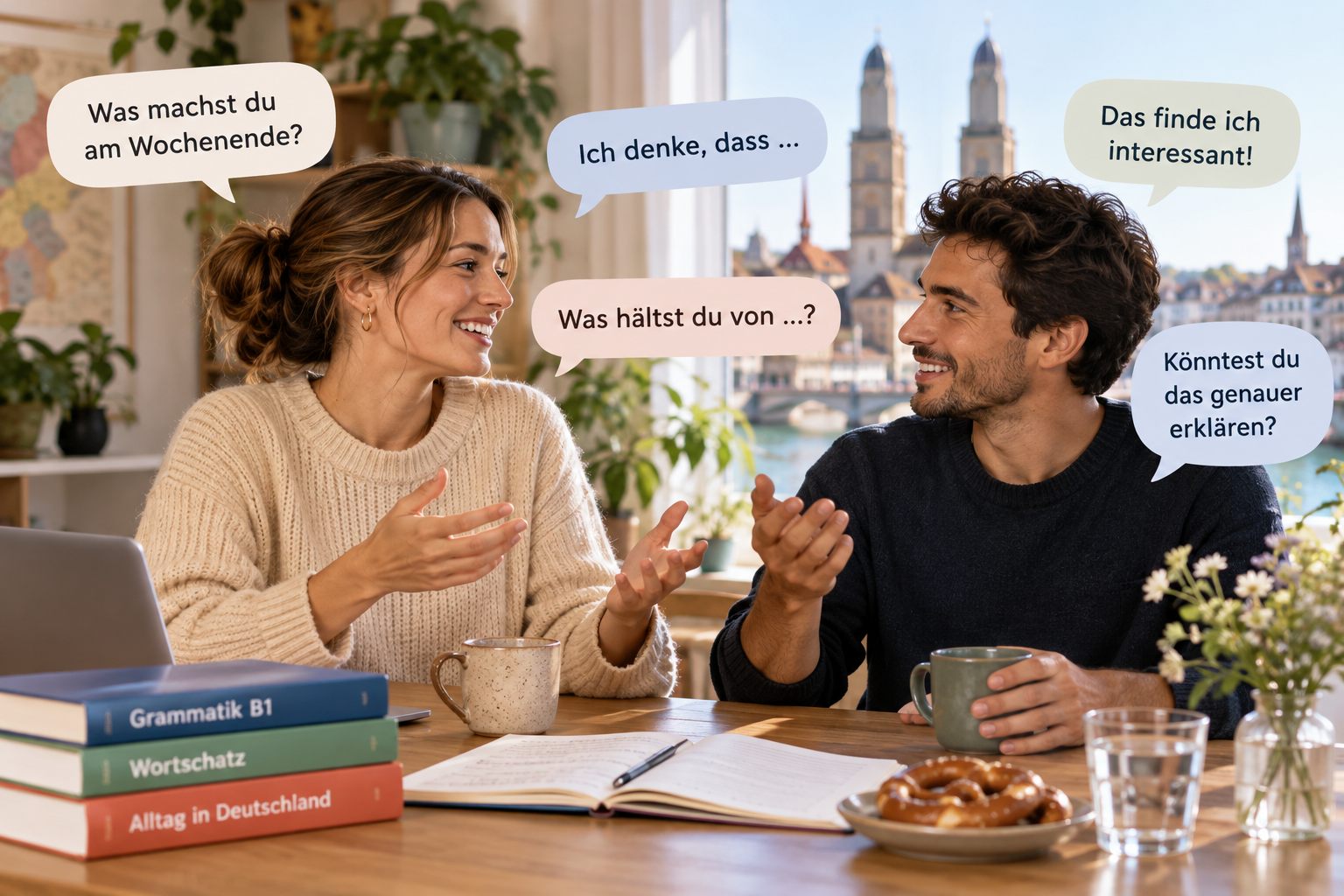
Many people taking the German B1 exam find the speaking module the most difficult. To overcome anxiety about holding a conversation in front of an examiner, take a B1 German course online and practice your conversation skills daily.
A few ideas on how to hone your conversion skills include role-playing, shadowing, and creating presentations that mimic the types of questions that will be asked during the test and the style of the presentation you will need to give on exam day.
Role-Playing
Role-playing is a learning technique whereby students act out real-life situations in a safe, low-pressure environment to practice essential vocabulary for German B1 and other communication skills.
Practicing real-world scenarios (e.g., ordering food, catching a train, interviewing for a job, etc.) helps learners build practical conversation skills they can use while living, working, or studying in Switzerland. This practice technique focuses on natural communication rather than on strict grammar rules and perfection; it also helps learners become more confident and reduce anxiety and shyness about speaking German in front of others.
The Shadowing Technique
When people are learning a language, they often start by memorizing vocabulary lists and dialogues. To become fluent, though, they need to take their speaking skills to the next level by learning how to pronounce words and sentences like a native speaker without hesitation.
One way to do this is by shadowing. Shadowing is a proven learning technique where the student listens to a recording and then repeats the sentences at the same time or immediately after it finishes. This helps students absorb the rhythm, stress, and intonation of the German being spoken, which boosts comprehension, confidence, and speaking fluency.
When shadowing, start by choosing a short audio between ten and thirty seconds long that also comes with a transcript. Listen to it once. Talk along with the recording when you play it a second time while simultaneously reading the transcript. Then, try repeating the dialogue without the transcript.
You can record yourself and compare it with the original recording to identify areas in your pronunciation that need improvement. Don’t worry about making mistakes; focus on rhythm and flow. Gradually start shadowing with longer recordings.
It might feel awkward at first, but shadowing is an effective way to independently build conversation fluency.
Mock B1 Presentations
German Academy Zurich can provide personalized German B1 exam study tips and guide you on the type of questions you might be asked during the Speaking section of the test. To build fluency, use this advice to create presentations and dialogues about work, daily routines, travel, media and culture, sports, social issues, housing, health and wellbeing, or one of the other topics commonly covered in a B1 exam.
A few ideas to get you started include:
- Plan a weekend trip with a friend to a place you’ve never been
- Explain how to get internet service installed in your apartment
- Debate the pros and cons of riding a bike versus taking the bus to work
- Discuss different customs from your home country versus Switzerland
Practice speaking by answering the question, giving a reason or justification for your answer, adding a personal example to support your position, and responding to questions or comments from others. Working with a partner is best, but you can also record yourself and listen back to your presentation and learn how to make it better.
Another easy way to build fluency is to talk out loud to yourself while you’re home, describing your day, opinions about a news story, or plans for the upcoming weekend.
What to Expect When You Take the Speaking Test
The Speaking portion of the B1 exam lasts for about fifteen minutes. Test takers must complete three tasks after choosing a topic from the two offered by the examiner.
The tasks are:
- Work with a partner for approximately three minutes to plan an activity or presentation.
- Present the topic in three minutes.
- Discuss your presentation and your partner’s presentation for about two minutes.
The examiner will observe and evaluate how well you can express your ideas and converse with your partner before, during, and after the presentations.
Practice With Professionals
The instructors at German Academy Zurich are highly trained and experienced professionals who guide their students with ideas on how best to practice for the B1 exam based on their learning style and language abilities. This type of individualized attention is possible through the one-on-one instruction offered by German Academy Zurich and our AI-driven learning platform!
Thank you for reading my article!
Check out our German course and start learning German today!
Hear you soon,
Anna
Start learning German today!
Reach your next German level and speak German confidently with our innovative German courses.
Trusted by Learners
Join thousands mastering German with us

As a parent, the promise of learn-anytime mattered. I did a lesson during nap time, booked a private session for after bedtime, and asked the AI assistant quick questions in between. My teacher corrected my pronunciation gently, and the final in-house exam mirrored telc, so there were no surprises when I sat the official test.

The online German A2 course was fantastic, particularly the personal speaking lessons and interactive exercises. The flexibility of the course allowed me to learn at my own pace while working my full-time job, significantly boosting my confidence and fluency in German.
I needed to reach German A2 proficiency to apply for my C residence permit. Thanks to the exceptional support of my teacher and the flexibility of the course, which allowed me to learn from the comfort of my home, I made rapid progress. The entire experience was both convenient and highly effective.

The German Academy transformed my career. Within 6 months, I was confidently presenting in German to our Munich office. The teachers are exceptional!

I needed an enrollment letter for my permit and got it within 24 hours, that took the stress out of the admin. The course is 100% online, so I studied on business trips and then met my teacher on Google Meet to polish speaking. The one-time price (no monthly drip) plus a money-back window made it an easy yes.

I was nervous about starting from zero, but the mix of short video lessons, lots of bite-size exercises, and one-to-one coaching meant I was speaking in our building’s lift by week two. I could book lessons after work and lean on the 24/7 AI tutor whenever grammar tripped me up. The progress bar kept me moving, and taking the final telc-style mock made the real exam feel familiar.
Inquire about your German course today
Please fill out our non-binding inquiry form. We will contact you within 24h with all the information about the language course that suits your need.
- Your inquiry does not imply any commitment to attend a course.
- Our Student Success Manager Saskia will contact you within 24 working hours.
- We will answer all your questions regarding language levels, our teaching methodology and details about our German private lessons.