Essential Vocabulary for German B1
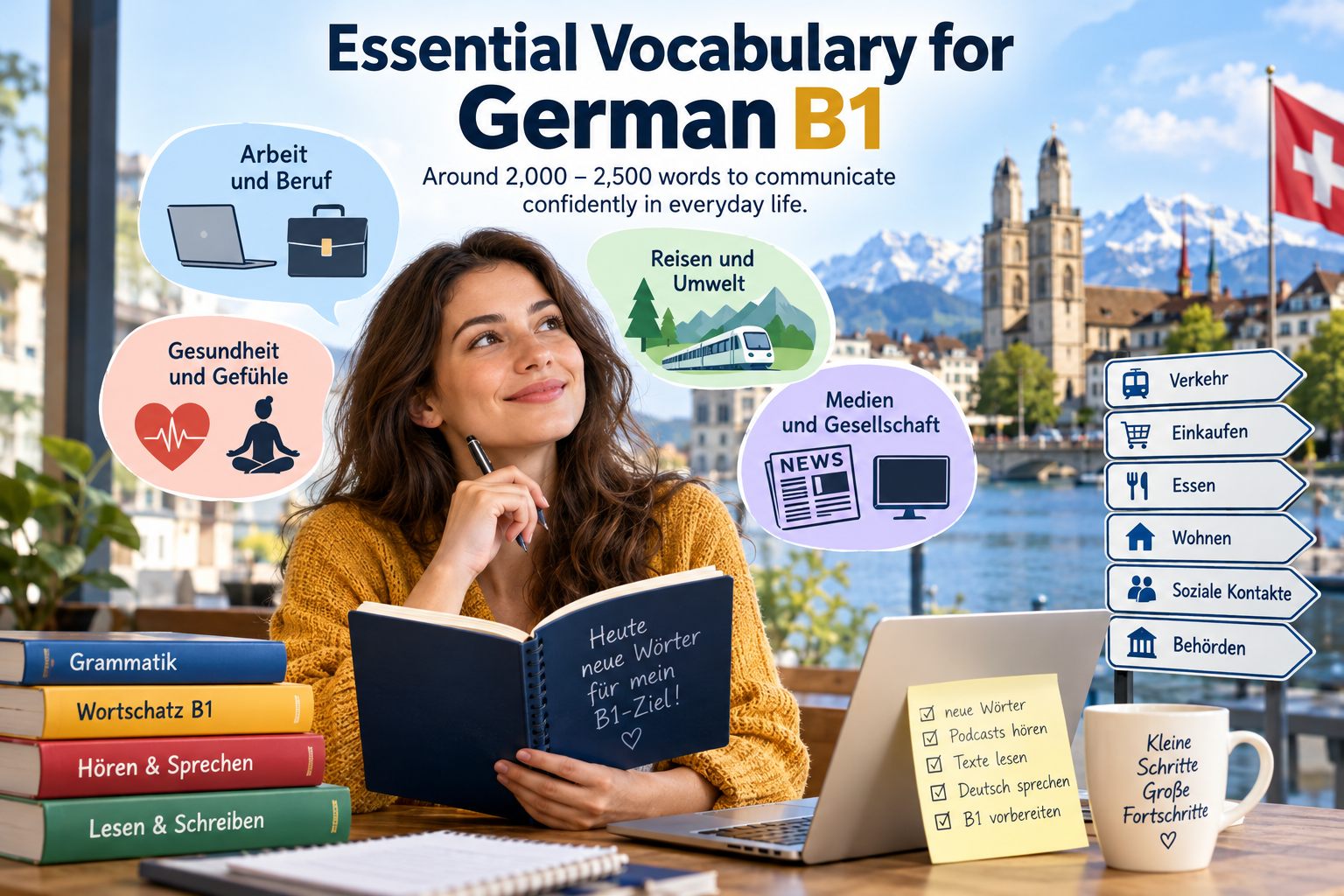
To reach a B1 intermediate level in the Common European Framework of Reference for Languages (CEFR), you will need to be able to read, write, and speak around 2,000 to 2,500 German words, as well as understand conversations you might encounter during a typical day in a German-speaking country.
A B1 German course can help a student prepare for the exam by building high-frequency vocabulary in core areas such as work and profession, travel and environment, health and feelings, and media and society.
What Is the CEFR B1 Level?
CEFR is a widely accepted international standard used to describe and measure a person's language abilities. There are six CEFR proficiency levels ranging from A1 (beginner) to C2 (fluent). Goethe-Zertifikat and telc use the framework to administer tests that universities, employers, and immigration authorities use to ensure applicants meet their program requirements.
A B1 certificate means the test taker can handle most conversations and can accurately describe their experiences, ambitions, and opinions. It's also the language level required by many Swiss employers, apprenticeship programs, academic and vocational programs, and Swiss citizenship and residency permits.
Words You Need to Know
German B1 conversation practice idea guides often include lists of essential words organized by themes and practical categories.
The B1 intermediate German level requires a solid grasp of abstract verbs that describe non-physical, mental, or theoretical concepts (e.g., to expect, to deal with, etc.) rather than a visible, physical action. Learners are also expected to use conjunctions and transition words such as instead or while to connect different thoughts.
Word lists can be found on:
- Downloadable apps with words, example sentences, and audio
- Reference books and materials that focus on high-frequency words
- Printable PDF guides with alphabetically sorted vocabulary word sets
- The Goethe-Institut website, which manages the Goethe-Zertifikat, also publishes an official B1 word list.
While some memorization is certainly necessary, learners benefit more from reading, listening, writing, and speaking German than only working with flashcards. Active practice can also help you naturally master foundational grammar concepts and expand your communication skills in German. If you have trouble recalling a word, use a synonym or group of words to keep the conversation going rather than freezing or overanalyzing your mistake.
What 2,500 German Words Can Do for You
When you master the 2,500 words needed for a B1 level, you'll be able to:
- Deal with most everyday situations (even unexpected ones) when using transportation, dealing with a local bureaucracy, talking with landlords, shopping, eating, working, attending school, and navigating social interactions
- Describe experiences, events, thoughts, future plans, and opinions
- Write simple letters, essays, and emails on familiar subjects
- Understand the main points of a conversation or written materials related to work, school, hobbies, or other activities you enjoy
- Understand the main points being made on German television, radio, podcasts, newspapers, and other media
- Hold conversations with native speakers without getting stressed
How to Reach a B1 Level in German
Many language-learning resources recommend that German learners set up a daily study schedule of about thirty minutes that includes learning fifteen to twenty new words. Daily practice is far more effective than sporadic, intense cramming sessions.
To master new vocabulary, learners should listen to podcasts or other recordings, read short articles or level-appropriate chapters in a book, and hold conversations with a tutor or native speakers. Actively recalling words and immersing yourself in a German-speaking community can accelerate fluency and confidence in speaking a new language.
However, it's important to manage your expectations and celebrate small wins. It usually takes a new learner with no prior knowledge of the German language about 350 to 450 hours of guided instruction to reach the B1 level.
For someone who consistently studies thirty minutes per day, it will take about two to 2.5 years to reach the B1 milestone. Of course, if you already have a firm understanding of A2 vocabulary, this timeline will be shorter.
A Learning Program That Meets Your Needs
German Academy Zurich is a digital-first German language school that combines private one-on-one instruction with an AI-powered platform to teach needed vocabulary and prepare expats and professionals in Switzerland for their B1 exam. Contact us today to learn why more than 1,600 students from more than sixty countries trust our language learning program to prepare them for the CEFR exam.
As our student Grace said, “The course is digital-first, but never impersonal. The blend of human coaching plus gamified courses is exactly what finally got me speaking naturally.”
Thank you for reading my article!
Check out our German course and start learning German today!
Hear you soon,
Anna
Start learning German today!
Reach your next German level and speak German confidently with our innovative German courses.
Trusted by Learners
Join thousands mastering German with us
As a parent, the promise of learn-anytime mattered. I did a lesson during nap time, booked a private session for after bedtime, and asked the AI assistant quick questions in between. My teacher corrected my pronunciation gently, and the final in-house exam mirrored telc, so there were no surprises when I sat the official test.

The online German A2 course was fantastic, particularly the personal speaking lessons and interactive exercises. The flexibility of the course allowed me to learn at my own pace while working my full-time job, significantly boosting my confidence and fluency in German.
I needed to reach German A2 proficiency to apply for my C residence permit. Thanks to the exceptional support of my teacher and the flexibility of the course, which allowed me to learn from the comfort of my home, I made rapid progress. The entire experience was both convenient and highly effective.

The German Academy transformed my career. Within 6 months, I was confidently presenting in German to our Munich office. The teachers are exceptional!

I needed an enrollment letter for my permit and got it within 24 hours, that took the stress out of the admin. The course is 100% online, so I studied on business trips and then met my teacher on Google Meet to polish speaking. The one-time price (no monthly drip) plus a money-back window made it an easy yes.

I was nervous about starting from zero, but the mix of short video lessons, lots of bite-size exercises, and one-to-one coaching meant I was speaking in our building’s lift by week two. I could book lessons after work and lean on the 24/7 AI tutor whenever grammar tripped me up. The progress bar kept me moving, and taking the final telc-style mock made the real exam feel familiar.
Inquire about your German course today
Please fill out our non-binding inquiry form. We will contact you within 24h with all the information about the language course that suits your need.
- Your inquiry does not imply any commitment to attend a course.
- Our Student Success Manager Saskia will contact you within 24 working hours.
- We will answer all your questions regarding language levels, our teaching methodology and details about our German private lessons.