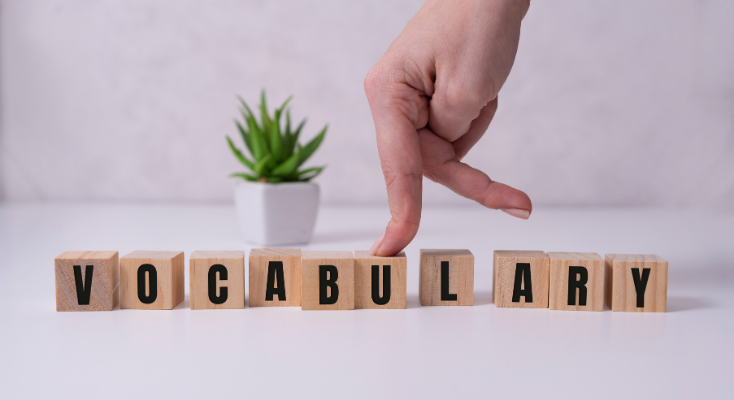
To master conversational German, you need to learn about 3,000 to 5,000 words. If you want to attain an advanced fluency level, you need to learn 10,000 words or more.
Private German lessons for adults help language learners build their vocabulary, but they need to reinforce these lessons with daily practice. Instead of memorizing lists of isolated words, adult learners should focus on high-frequency words grouped by theme or context, use physical or digital flashcards, learn German grammar tips for adults, and incorporate reading, writing, and speaking new words into their daily routine.
Vocabulary Learning Strategies
To truly learn German, you can’t just repeat words and conjugations; you have to know them. Here are a few ideas on how to grow the number of words you master:
Group High-Frequency Words Into Categories
Start by learning words that you’ll often hear and see based on your interests and lifestyle. It’s easier for your brain to remember high-frequency words when they have meaning (e.g., words related to family, food, transportation, sports, work, or your daily routine).
This gives more context to the words, making them easier to retain than lists of random vocabulary. Make sure not to make the list too long, so the words are easier to absorb.
Keep a small notebook on hand so if you encounter a word you don’t know that’s lower frequency, you can jot it down and look it up later. Focusing on high-frequency words also aligns with the 80/20 rule, which says that mastering the most common words (which make up about 20% of everyday German) will help you understand about 80% of what is being said.
Use Flashcards
Flashcards are a tried-and-true method of learning vocabulary. Learners can use physical cards with the German word and an image on one side, and the English translation on the other.
Include compound words on your flashcards. It’s common in German to see words strung together to create new words. When you understand how this is done, you’ll be able to decode more complex terms.
For those who prefer a digital approach, there are vocabulary apps designed to help with vocabulary learning. Translator apps have also become more sophisticated, and you can translate words simply by pointing your phone camera at text.
Just don’t become over-reliant on a translator app, or you won’t retain new words. You can also use sticky notes to label items around the house to learn words through visual associations with objects.
Learn Some Grammar Basics
Understanding the basics of German grammar will help you better understand the context of new words and create meaningful sentences that relate to your life.
Immerse Yourself in the Language
There are many ways you can convert your vocabulary into action. Read a newspaper or book in German, talk to yourself in German describing the tasks you’re doing around the house, listen to a German podcast or song, watch a movie with English subtitles, or play German vocabulary games.
Even better, get out into your community and practice your vocabulary with native Swiss German speakers. This will help you learn idiomatic expressions and German language basics for Americans abroad that might not be on standard vocabulary lists. Most people are patient with new language learners and will encourage you to keep trying.
Private Instruction Accelerates Language Learning
The German Academy Zurich uses an immersive, personalized approach that combines one-on-one teaching with an AI-powered learning platform. This unique approach has been used successfully by thousands of learners of all different ages and skill levels.
As one financial analyst noted, “The German Academy transformed my career. Within six months, I was confidently presenting in German to our Munich office. The teachers are exceptional.”
Submit an inquiry form to choose your course today!